
When commercialising a new technology, one of your most critical tools is pitching. A pitch is a short presentation, typically 3-5 minutes, in which you grab attention towards your project. Innovators usually have a specific goal when pitching, often to get meetings with potential investors.
Pitches are presented in demo days, an event where the audience typically will see 6 to 20 pitches, and only the most attractive ones will stand out enough to interest investors. These potential investors usually have three questions in mind:
- Is this a relevant problem?
- Is there a good business opportunity here?
- Is this the right team/project to tackle this opportunity?
This article suggests an 8-slide structure to present your 3-5 minute pitch (approximately 30 seconds per slide). If you follow this structure, you will be able to answer all three of these questions.
Slide 1: The problem
Briefly describe the problem you are trying to tackle. If you can, quantify it. You can also describe who is affected by the audience. The goal is to grab attention by showing that you are tackling a relevant problem.
An alternative is to tell a short story about how you experienced a problem and how you solved it. If you choose this route, make sure to make it short, as you can’t spend too much time on this slide.
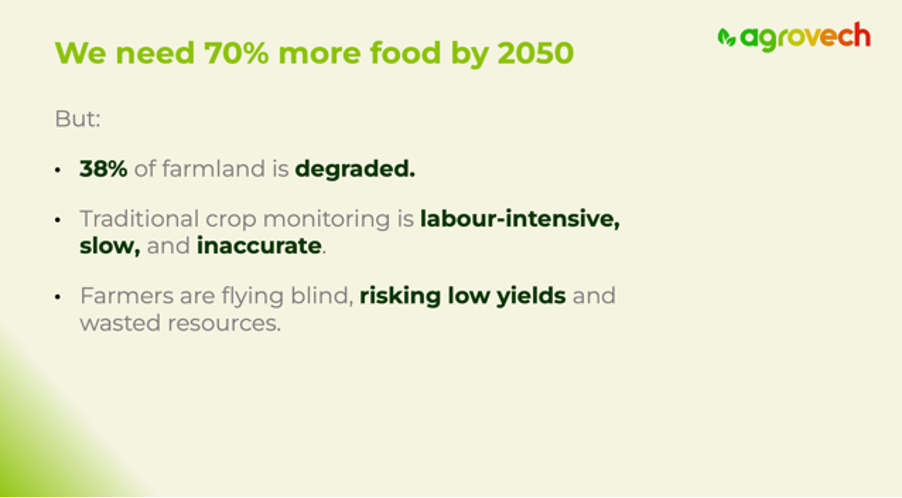
Example1: Agrovech uses AI, drones and satellite images to help farmers boost yields. They clearly show there is a growing need for food, but farming is facing several key issues.
Example 2: Arcube enables airlines to rapidly launch and personalise ancillary services. They tell the story of how one of their cofounders had a poor experience with the loyalty points when taking a flight

Slide 2: The solution (value proposition)
In this slide, you will briefly show how your solution tackles the problem. Make sure to present your solution clearly, using simple language, in a way that everyone will understand. Don’t be too technical. Academic entrepreneurs usually make the mistake of getting too excited explaining the details of the technology, because of course – they’ve been spending so much time developing it! And they are used to explaining it to their peers in seminars, to colleagues/students, and due to this are used to using more complex academic language. But this is NOT about your technology. It is about how your solution tackles the problem, and in a few seconds, you will be able to explain that. If people are interested, they will ask you about the details of the technology which you can provide later.
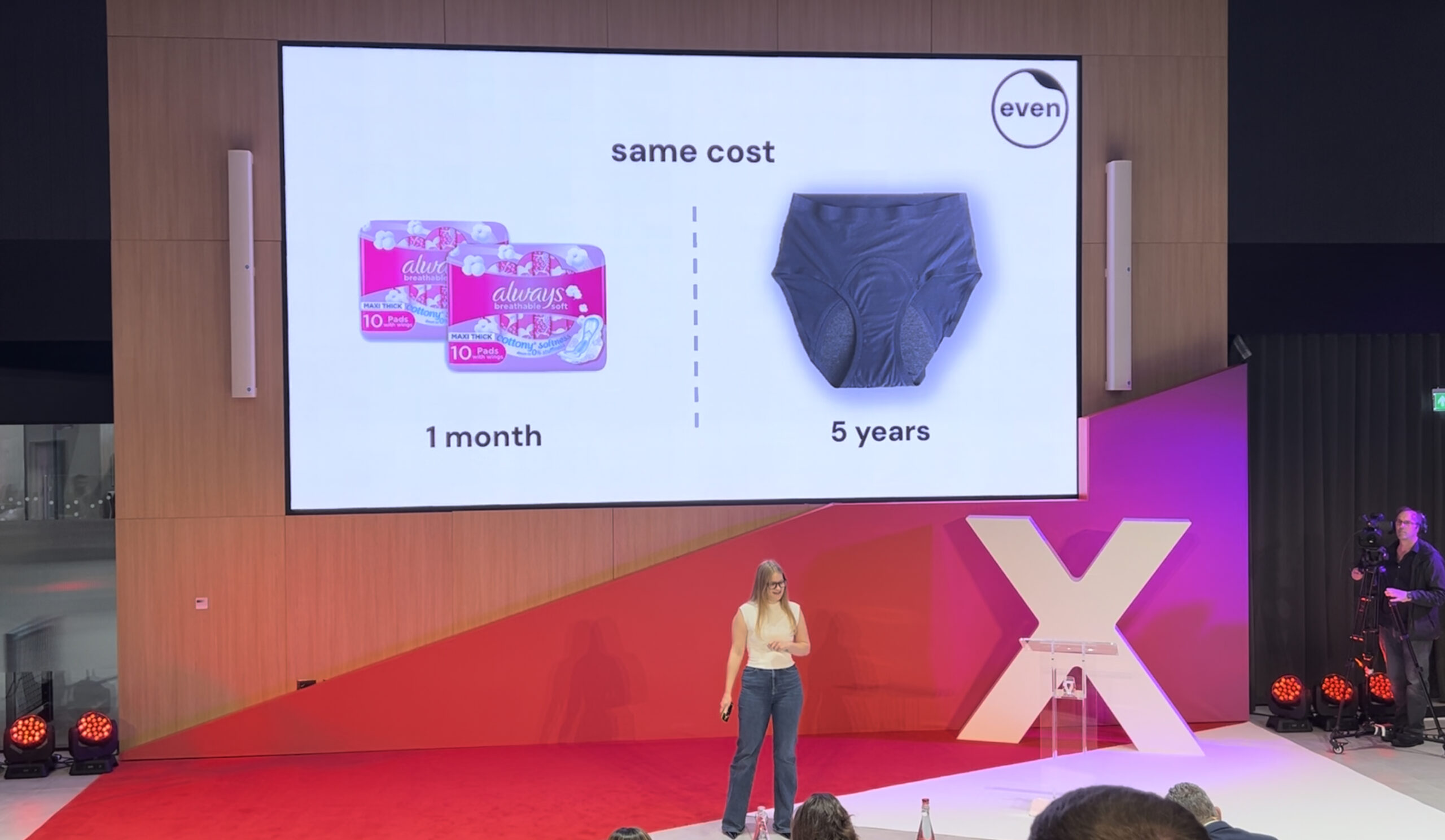
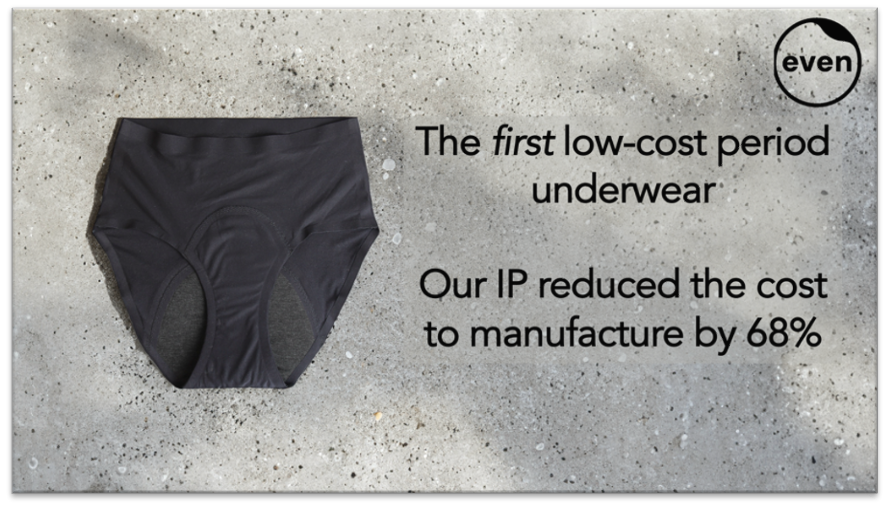
Example 1: Even created the first low-cost period underwear. You see the slide, and you understand the solution. They are not explaining the technicalities now (materials used, the reasoning behind that particular design, performance indicators, or other attributes). They are ready to answer those questions, but right now, it is just about showing their solution to the problem.
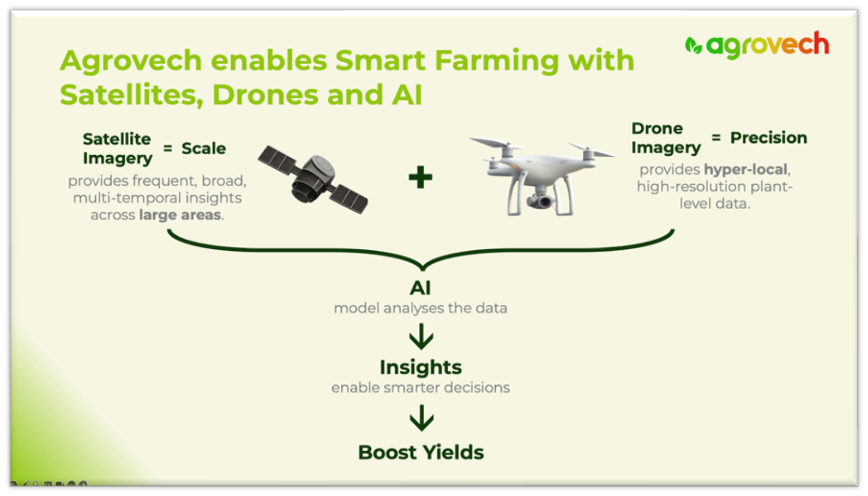
Example 2: Agrovech shows how they combine data coming from drones and satellites, which then feeds an AI model that then provides insights to farmers. Because of the insights they can provide, Agrovech can easily become overly technical but the slide is simple, and we don’t need to be experts to understand.
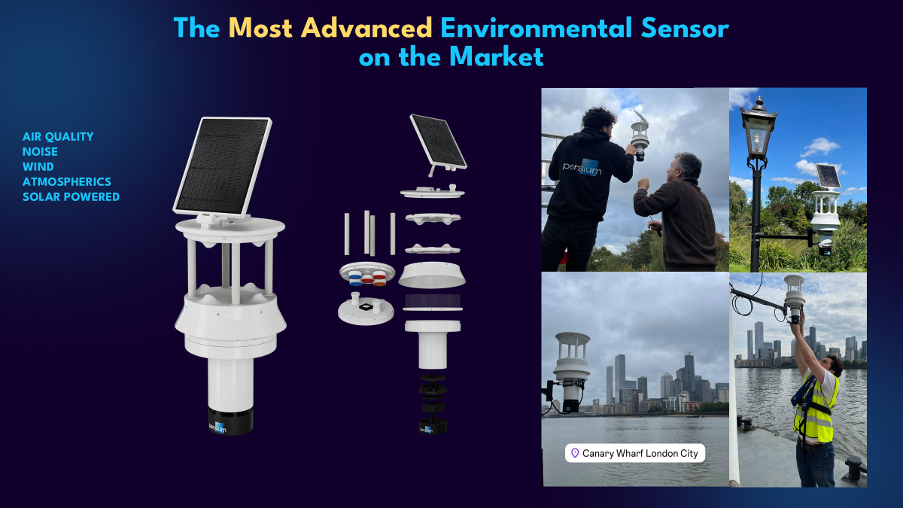
Example 3: Persium shows how their sensors can be easily added to existing infrastructure (eg, a lamppost).
This structure immediately answers Investor’s first question: “ Is this a relevant problem?” and leads them to the next question: “is there a good business opportunity here?” which the next three slides will answer.
Slide 3: Market Size.
Show how big your market is. A good way of doing this is by using a bottom-up approach. This means you will reach a validated number of potential customers, and multiply that by a price. That will tell you the market you can reasonably aim for. And you can also show the total size of the market, to understand “how big is big”. Avoid saying, “this market is huge, and If we only capture 1% of this huge market…”, instead always focus on measurable and sourced data.
Ideally, you will be able to quantify it monetarily (pounds, dollars, etc). But sometimes it is not possible to access high-quality data to estimate those numbers. If so, show a relevant unit. Eg: number of patients with this disease in certain countries.
Example 1: Even is selling low-cost period underwear in humanitarian camps. They show the humanitarian market size and its annual growth rate with this slide.

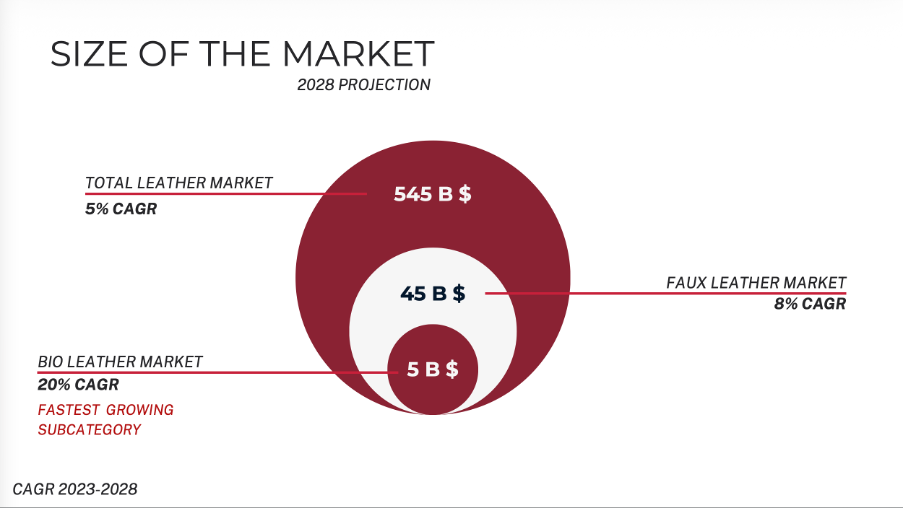
Example 2: Yugen (Pomeco) is a bioleather made from pomegranate uses the standard “TAM SAM SOM” approach. When this is used, it is important to label what is the TAM, the SAM and the SOM. In this case, also
Please note that if you are pitching a technology, instead of a business, and you want ti license it, a good idea is to show the market size of the main potential applications.
Slide 4: Business Model
This is about explaining how you are going to make money. Keep it simple. Your audience is likely going to know a lot about business, and they will get it immediately.
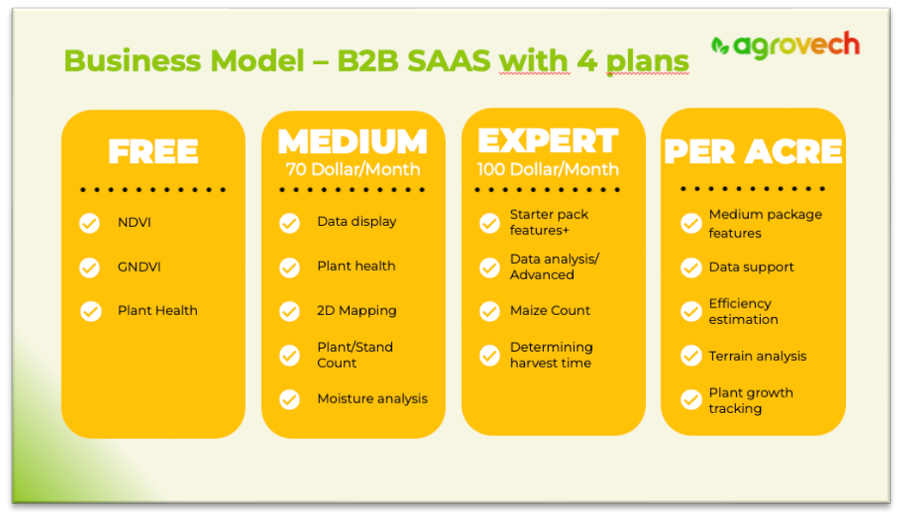
Example 1: Agrovech shows they’ve got 4 plans, and it is a Software as a Service targeting businesses.
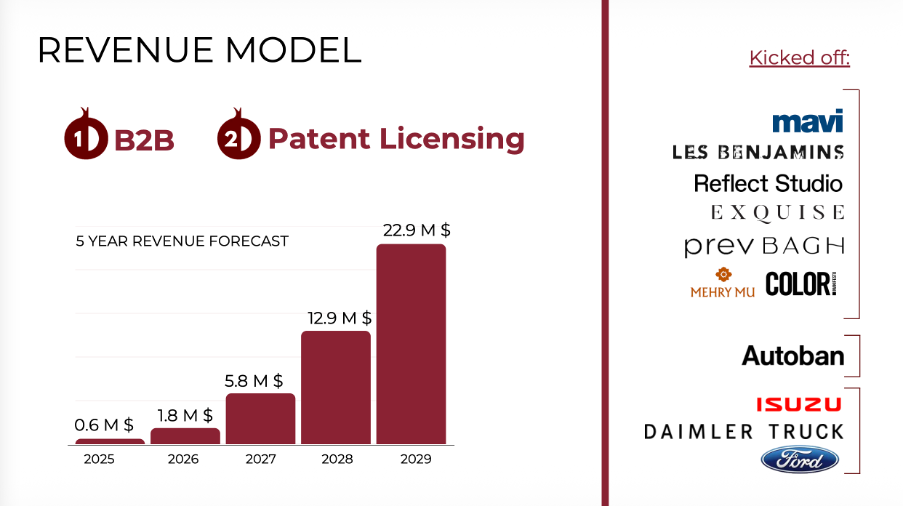
Example 2: Yugen (Pomeco) shows its business model is B2B and Licensing. The pitch should explain how the companies at the right will use their biomaterial. As a slide deck, this is the visual support needed.
Slide 5: Competition
If there is a good opportunity out there, there must be others trying to tackle it! Show that you know your competition. You don’t need to beat the competitors on every single attribute, but you’ve got to have something that sets you apart.
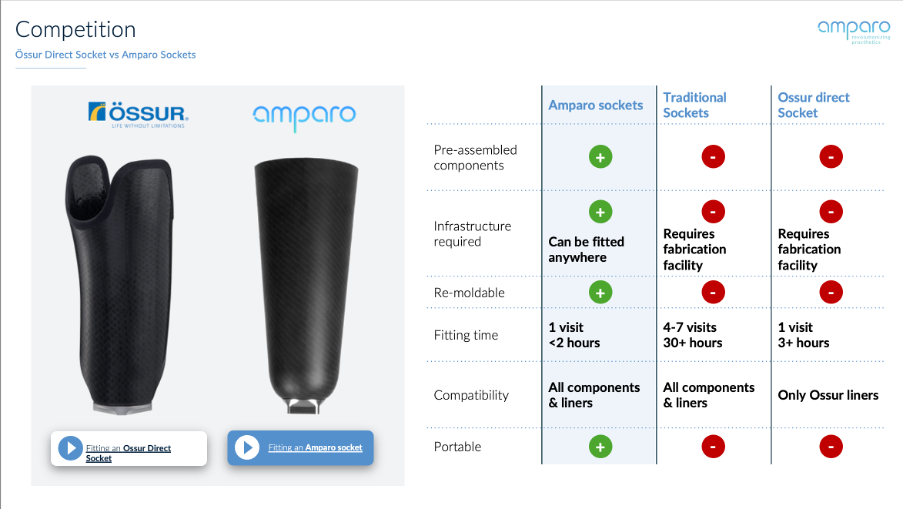
Example 1: Amparo Prosthetics offers a socket that can be fitted anywhere in just 1 visit and under 2 hours. They use a table with a list of attributes to compare themselves to others.
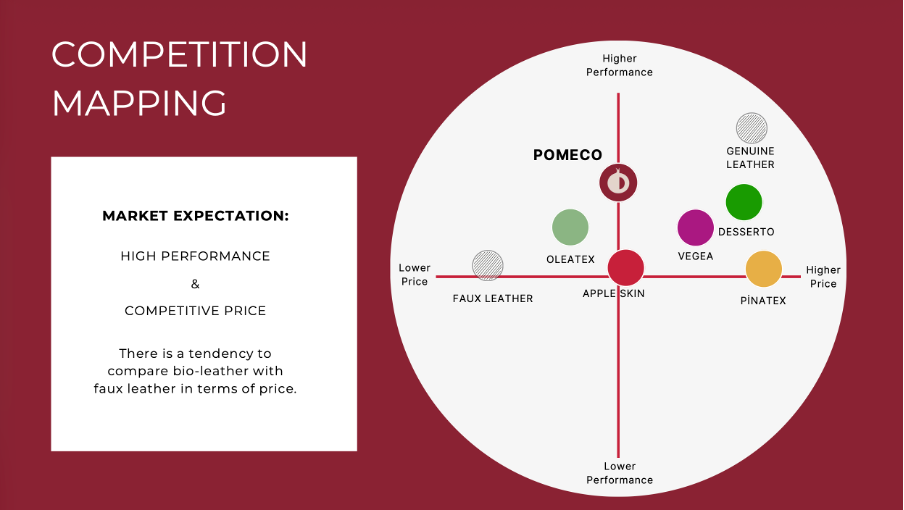
Example 2. Yugen (Pomeco) shows two relevant attributes in bioleathers: performance and price. They don’t need to win in both attributes: they are in the mid-point when it comes to price. But their higher performance is what sets them apart.
Slide 6: Team
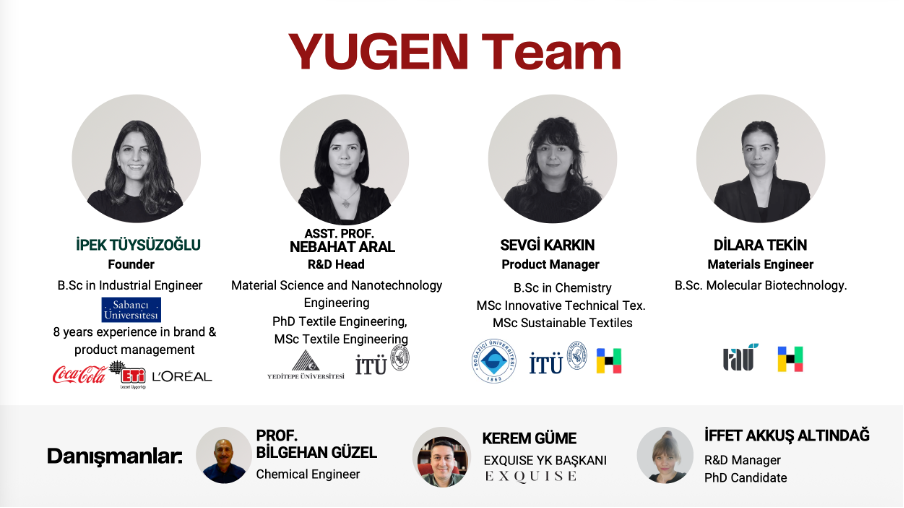
Many consider the team the most important item when assessing an investment. Because at an early stage, chances are that your business model will change, as you get product-market fit. But the founding team will remain. Show your key people and how their experience is relevant. For example, if they have worked in the industry, studied in prominent institutions, or worked in previous startups. Only show the key members (such as co-founders or the leadership team).
Example 1: Yugen (Pomeco) shows their team, with their roles, education and logos of their previous experience.
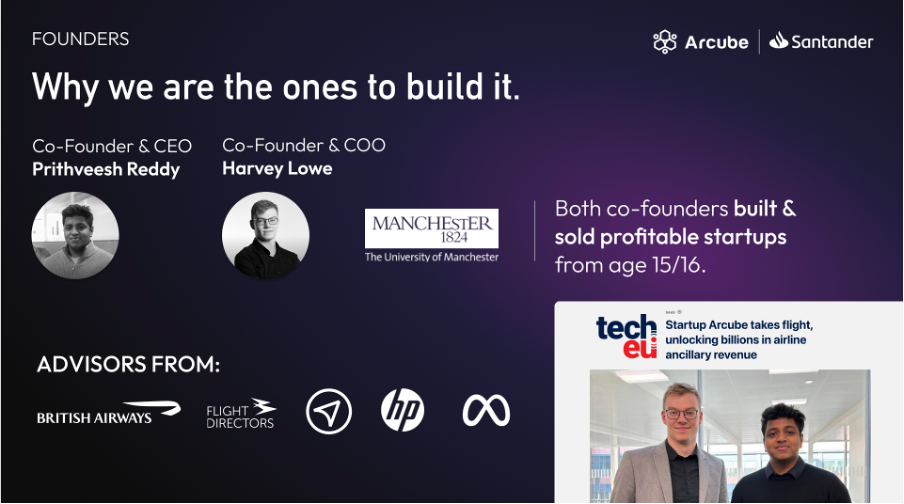
Example 2: Arcube. Both founders were still undergraduate students when presenting this pitch. So, instead of focusing on their education and experience, they shared a brief story of how both of themcreated successful businesses when they were teenagers. They also highlight the connection of their advisors.
Slide 7: Traction
Traction is just jargon for “measurable success”. Show any relevant result. This can be done in many ways:
- Pick 1 to 3 key business metrics and show them in a chart. Revenue, Profits, number of users, monthly active users, etc.
- Show a timeline with previous relevant milestones.
- Show funds that have already been invested in your project.
- Show product usage relevant metrics. For example, the results of a pilot.
Please, focus on what you have actually achieved. Goals and projections may say a bit about your ambition, but they say very little about your capacity to deliver. Investors are assessing the latter right now.
If your startup is not in the market yet (eg, it is a medical device or product that needs several approvals before launching), you can show other results, such as Intellectual property, awards, TRL level or results from a pilot. If you are not on the market, the previous team slide will be more important. Once you achieve sales, your results will speak for themselves, and the traction slide will be more important than the team slide.
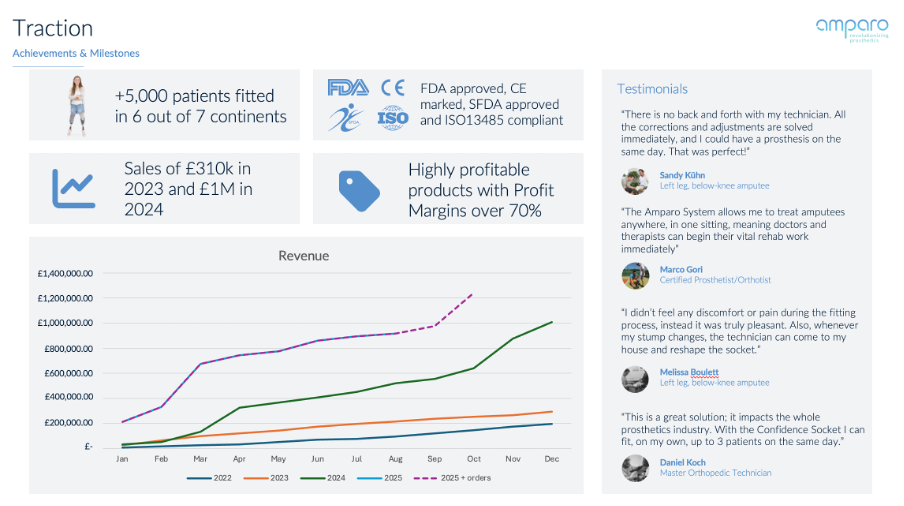
Example 1: Amparo Prosthetics shows their revenue and testimonials.
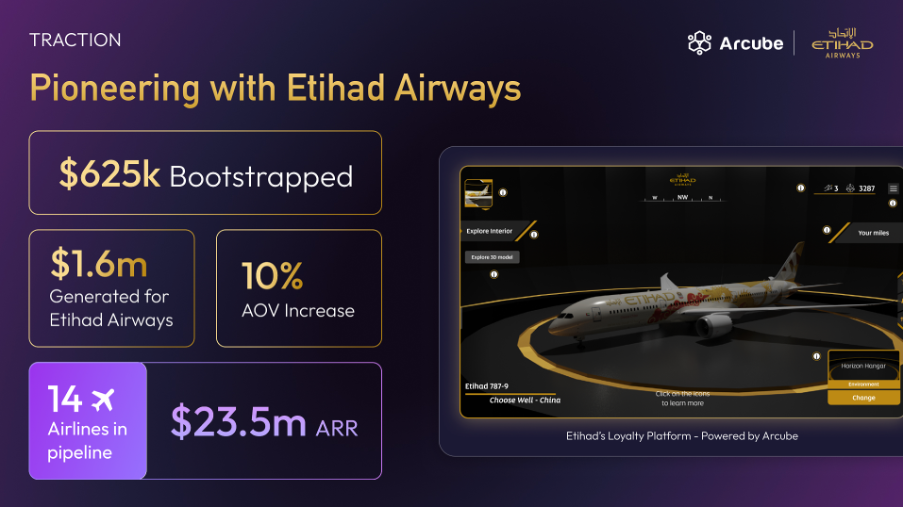
Example: Arcube shows the results of their pilot with Etihad Airlines. What is remarkable about this is that they have generated 1.6 million in additional revenue.
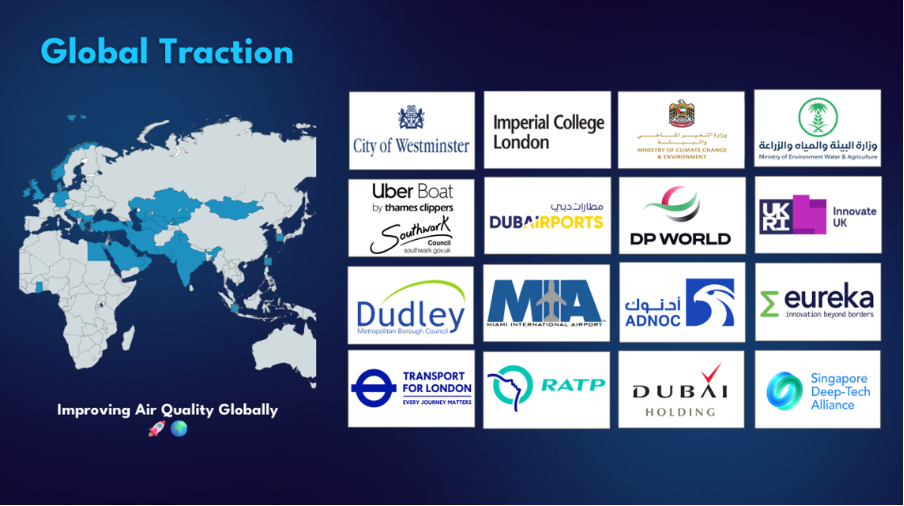
Example 3: Persium shows how they have clients in many countries, which adds credibility to their solution.
Slide 8: Call to Action
If you have held people’s attention for this long, you are now at the point where you can ask for something. Usually, innovators ask for money, although sometimes the request could be something different: connections with people in a certain industry, users who want to try the product, or you might be looking for a cofounder and so on.
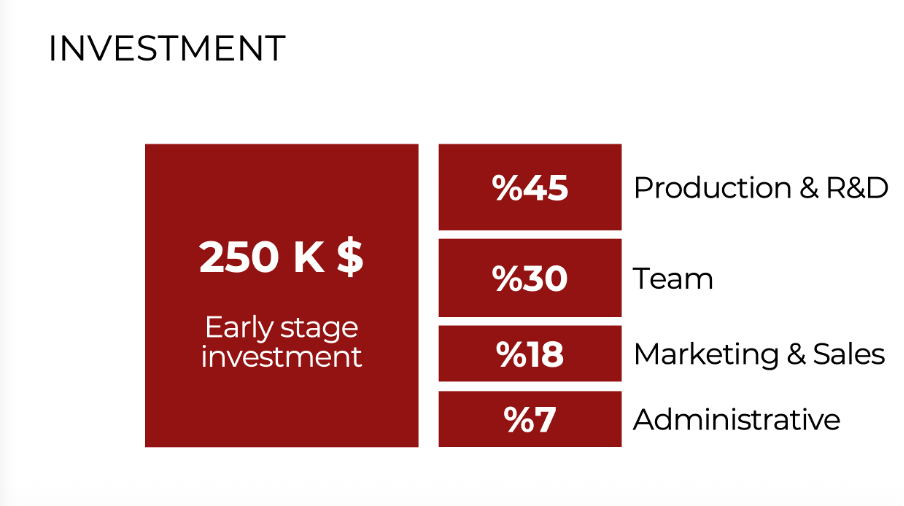
Example 1: Yugen (Pomeco) asks for investment, and explains how it is going to be used:
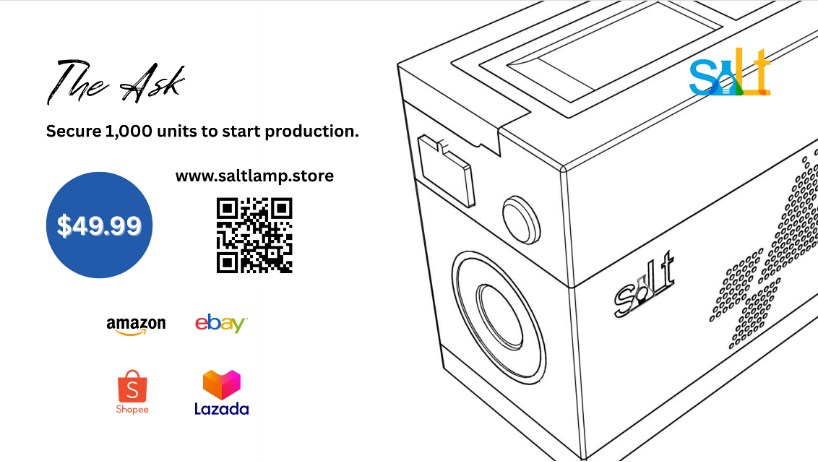
Example 2: SALt ask for early buyers to get their product, to secure production.
Bonus: Q&A
Once you practice pitching, you will notice that you often receive similar questions. You can prepare for those by adding slides to pre-empt your answers. these ‘pre-empting’ slides could describe the product with more detail, address some financial aspects, or include a roadmap. It’s a good idea to further refine these clarifying slides as you gain experience including answers to questions you have been asked before.
By following this clear structure, you’ll ensure your pitch stands out and gives investors every reason to believe in your product’s potential.